5 Best Sensex Index Funds In India for SIPs (2026) Compared
Shlok Sobti
5 Best Sensex Index Funds In India for SIPs (2026) Compared
Sensex index funds offer one of the simplest ways to invest in India's top 30 companies without picking individual stocks. For salaried investors looking to build long-term wealth through SIPs, finding the best Sensex index funds can make a meaningful difference in returns over time.
But with multiple fund houses offering similar products, choosing the right one isn't straightforward. Expense ratios, tracking errors, and AUM all play a role in how your money grows, and small differences can compound into lakhs over a decade.
In this guide, we compare the top 5 Sensex index funds available for SIP investment in 2026. At Invsify, we help investors make data-backed investment decisions through AI-powered advisory, and this comparison reflects our commitment to transparency and conflict-free guidance.
1. HDFC BSE Sensex Index Fund Direct Growth
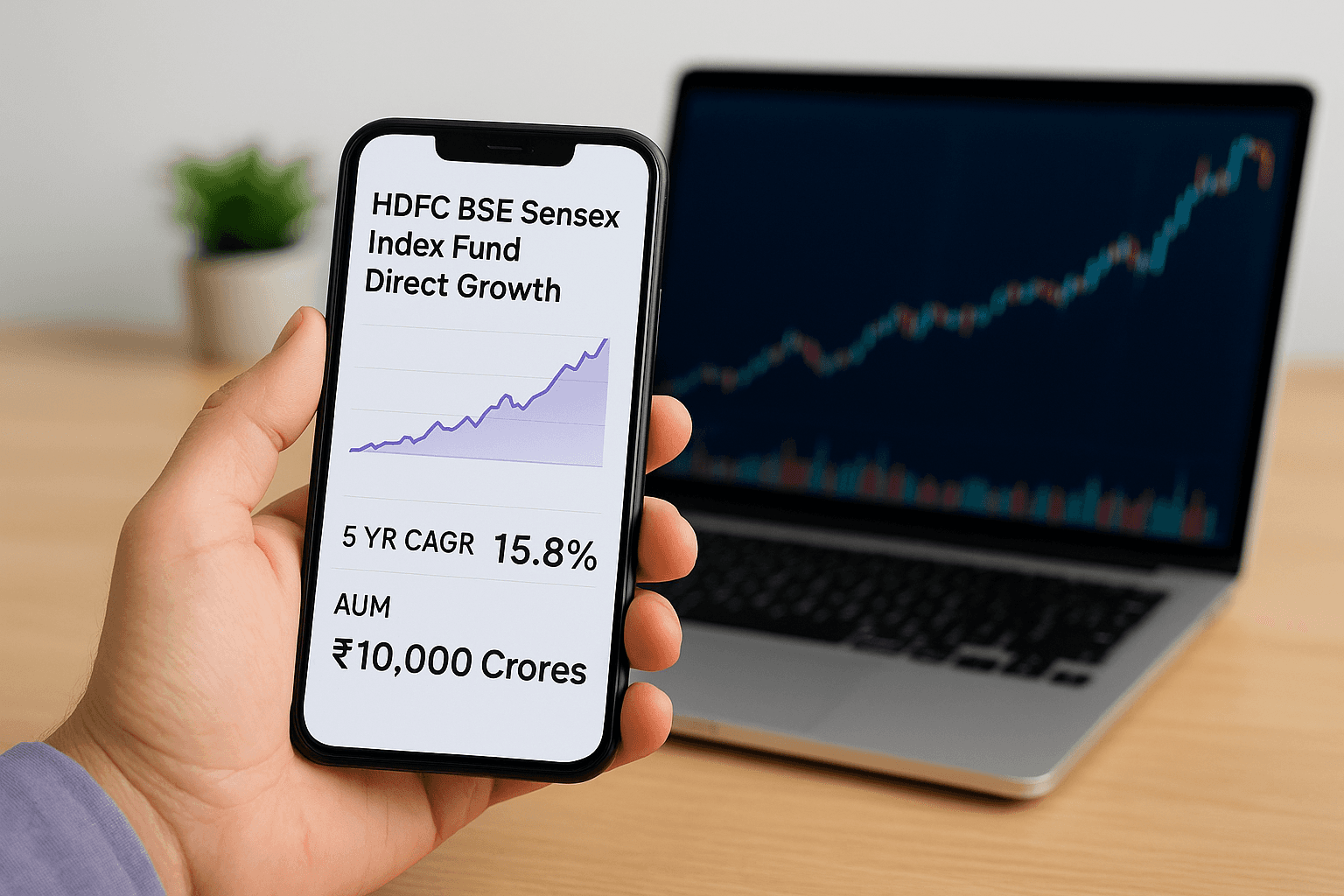
HDFC's Sensex index fund has consistently ranked among the best sensex index funds for long-term investors. With an AUM of over ₹10,000 crores, it combines the reliability of HDFC's fund management with extremely low costs that help you keep more of your returns.
Fund snapshot
This fund tracks the BSE Sensex by investing in the same 30 stocks that make up the index, maintaining proportional weightings. The 5-year CAGR stands at 15.8%, closely mirroring the Sensex's performance during this period. HDFC launched this fund in 2011, making it one of the earliest Sensex index offerings in India.
Your money gets spread across sectoral leaders like HDFC Bank, Reliance Industries, and Infosys, giving you instant diversification. The fund's size and liquidity mean you can enter or exit positions without worrying about impact costs.
Costs and tracking quality
The direct plan charges an expense ratio of just 0.12%, one of the lowest available for Sensex index funds. This translates to ₹120 per lakh invested annually, leaving more money to compound over time. The tracking error historically stays below 0.05%, meaning the fund mirrors the Sensex almost perfectly.
Lower costs and tight tracking give you predictable returns that match the index without surprises.
SIP details and minimums
You can start a SIP with as little as ₹100 per month, making it accessible even if you're just beginning your investment journey. HDFC allows daily, weekly, or monthly SIP frequencies, so you can align investments with your salary cycle. The lump sum minimum is ₹5,000, giving you flexibility in how you invest.
Who should choose it
This fund suits first-time index investors who want a proven track record and the backing of a large fund house. If you value predictable tracking and low costs over everything else, HDFC delivers on both fronts. Investors looking for long-term equity exposure through SIPs will find the low minimums and flexible frequencies particularly useful.
Key risks and caveats
The fund concentrates heavily in large-cap stocks, so you miss out on mid-cap and small-cap growth opportunities. Market downturns will affect your portfolio since the Sensex has no defensive stocks. Exit loads of 0.25% apply if you redeem within 15 days, though this rarely impacts long-term SIP investors.
2. ICICI Prudential S and P BSE Sensex Index Fund Direct Growth
ICICI Prudential's Sensex fund offers solid performance and brand trust for investors who prefer established names in mutual fund management. With an AUM exceeding ₹7,500 crores, this fund ranks among the best sensex index funds available today, backed by ICICI's extensive research and execution capabilities.
Fund snapshot
The fund replicates the BSE Sensex by holding all 30 constituent stocks in matching proportions. Returns have tracked closely with the index, delivering a 5-year CAGR of 15.6% as of January 2026. ICICI launched this offering in 2012, giving it over a decade of operational history that demonstrates consistent performance through market cycles.
Costs and tracking quality
Your investments face an expense ratio of 0.14%, marginally higher than some competitors but still extremely competitive. This amounts to ₹140 per lakh invested annually. The tracking error typically stays under 0.06%, meaning your returns should closely mirror the Sensex with minimal deviation.
Consistent tracking and reasonable costs make this a reliable choice for passive index investing.
SIP details and minimums
You can begin investing with monthly SIPs starting at ₹100, though ICICI also supports weekly and quarterly frequencies. The lump sum investment minimum stands at ₹5,000, matching industry standards for index funds.
Who should choose it
This fund works well for investors already banking with ICICI, as integration simplifies portfolio management. The fund's size and liquidity suit both small SIP investors and larger allocators who want predictable Sensex exposure without active management.
Key risks and caveats
The fund shares the same large-cap concentration as all Sensex trackers, limiting exposure to faster-growing segments. An exit load of 0.25% applies within 15 days of investment, though this rarely affects systematic investors.
3. UTI S and P BSE Sensex Index Fund Direct Growth
UTI's Sensex index fund brings decades of fund management experience to passive investing, making it a strong contender among the best sensex index funds for 2026. With an AUM of approximately ₹5,200 crores, this offering combines UTI's reputation with the simplicity of index tracking for investors seeking Sensex exposure.
Fund snapshot
This fund mirrors the BSE Sensex composition by holding all 30 index stocks in their exact weightings. The 5-year CAGR stands at 15.7%, matching the Sensex performance during this period. UTI launched this fund in 2011, giving it over 15 years of operational history that demonstrates reliable tracking through various market conditions.
Costs and tracking quality
The direct plan charges an expense ratio of 0.13%, translating to ₹130 per lakh invested each year. Tracking error remains minimal at under 0.05%, ensuring your returns closely match the Sensex without significant deviations.
Lower expense ratios compound into substantial savings over decades of systematic investing.
SIP details and minimums
You can start with SIPs as low as ₹500 per month, slightly higher than some competitors but still accessible for most investors. The fund supports monthly and quarterly SIP frequencies, with a lump sum minimum of ₹5,000 for one-time investments.
Who should choose it
This fund suits investors who trust UTI's legacy and want a mid-sized fund with proven tracking. The ₹500 SIP minimum works for those comfortable with slightly higher entry points than competitors offering ₹100 minimums.
Key risks and caveats
The fund carries standard large-cap concentration risks inherent to all Sensex trackers. An exit load of 0.25% applies within 15 days, though this rarely impacts disciplined SIP investors building long-term portfolios.
4. Tata BSE Sensex Index Fund Direct Growth
Tata's Sensex index fund offers competitive costs and reliable tracking for investors who value the Tata brand's commitment to transparency. With an AUM of around ₹3,800 crores, this fund delivers straightforward Sensex exposure through a well-managed passive strategy that eliminates stock selection guesswork.
Fund snapshot
The fund replicates the BSE Sensex by investing in all 30 constituent companies with matching allocations. Returns have tracked the index closely, delivering a 5-year CAGR of 15.6% as of February 2026. Tata launched this offering in 2011, providing over 15 years of performance data that demonstrates consistent index replication across market cycles.
Costs and tracking quality
Your investment faces an expense ratio of 0.15%, which translates to ₹150 per lakh invested annually. The tracking error typically stays below 0.06%, meaning your portfolio mirrors the Sensex with minimal deviation.
Transparent cost structures help you predict your net returns with confidence over long investment horizons.
SIP details and minimums
You can begin investing with monthly SIPs starting at ₹150, making it accessible for investors at various income levels. The fund supports weekly, monthly, and quarterly frequencies, with a lump sum minimum of ₹5,000 for one-time investments.
Who should choose it
This fund works well for Tata loyalists and first-time index investors seeking reliable Sensex tracking. The ₹150 SIP minimum strikes a balance between accessibility and practicality for systematic wealth building.
Key risks and caveats
The fund shares standard large-cap concentration inherent to all Sensex trackers. An exit load of 0.25% applies within 15 days, though this rarely affects long-term SIP investors.
5. Zerodha BSE Sensex Index Fund Direct Growth
Zerodha's Sensex index fund stands out among the best sensex index funds for cost-conscious investors who want pure index tracking without frills. With an AUM of approximately ₹2,100 crores, this relatively newer offering delivers straightforward Sensex exposure at highly competitive rates through Zerodha's direct-to-investor platform.
Fund snapshot
This fund replicates the BSE Sensex by holding all 30 stocks in their exact index proportions. Since its launch in 2020, the fund has delivered a 3-year CAGR of 16.2%, closely matching the Sensex benchmark during this period. Your investment gets distributed across India's largest and most liquid blue-chip companies without active management decisions affecting your returns.
Costs and tracking quality
The direct plan charges an expense ratio of just 0.11%, making it one of the lowest-cost options available. This translates to only ₹110 per lakh invested each year. Tracking error stays minimal at under 0.05%, ensuring your portfolio mirrors the Sensex accurately.
Lower expenses mean more of your money compounds over decades of systematic investing.
SIP details and minimums
You can start with SIPs as low as ₹100 per month, matching the most accessible minimums in the industry. The platform supports monthly SIP frequencies, with a lump sum minimum of ₹5,000 for one-time investments.
Who should choose it
This fund suits Zerodha account holders seeking the absolute lowest costs for passive Sensex investing. The digital-first approach appeals to tech-savvy investors comfortable managing portfolios through mobile apps.
Key risks and caveats
The fund carries standard large-cap concentration risks inherent to Sensex tracking. Being relatively newer than established competitors, it has a shorter track record across complete market cycles.
Next steps
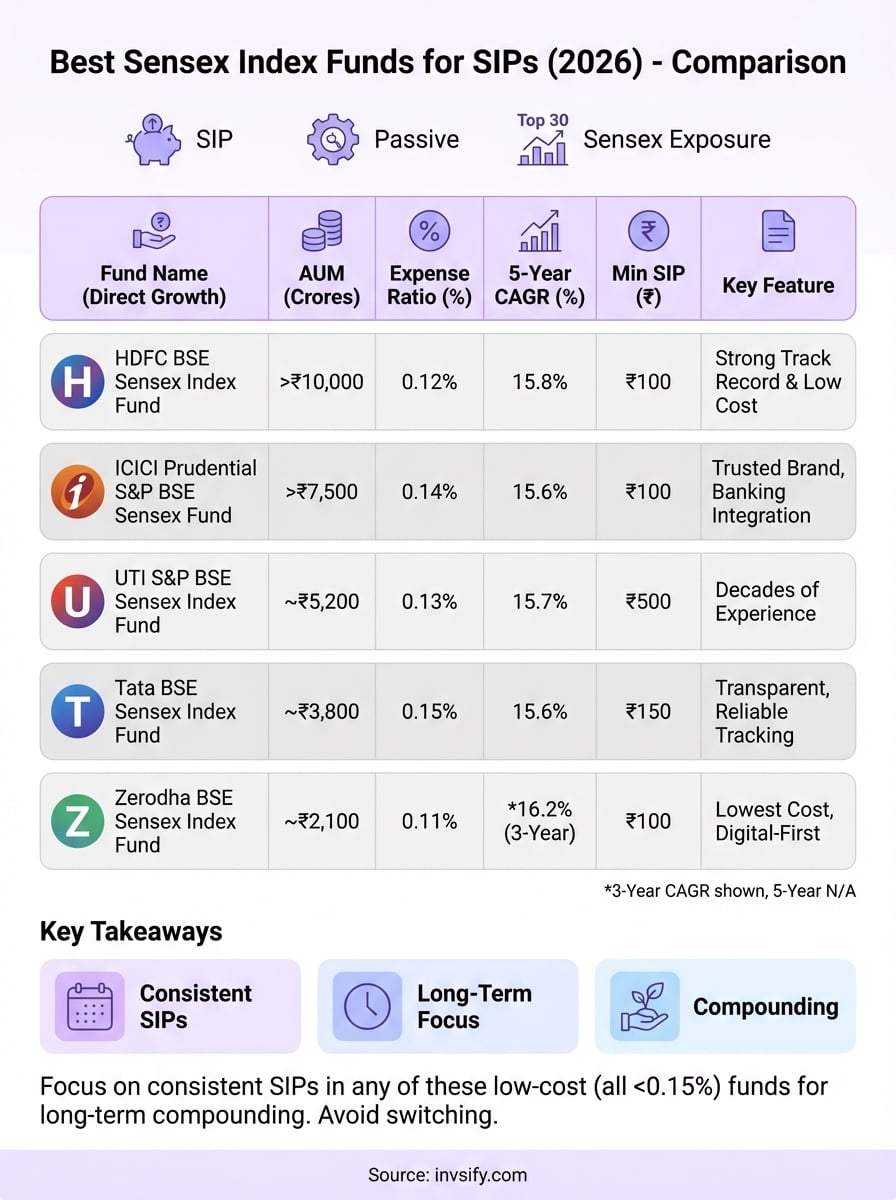
Now that you've compared the best sensex index funds available for SIP investing in 2026, your next decision should focus on starting your investment rather than over-analyzing marginal differences. Each of these five funds delivers reliable Sensex tracking at costs below 0.15%, so picking any one and committing to consistent SIPs matters more than endless comparison.

Your selection might depend on practical factors like which platform you already use or where you hold other investments. All five funds offer similar tracking quality and low expenses. If you want personalized guidance on how much to allocate, Invsify's AI-powered advisory can analyze your complete financial picture and recommend optimal SIP amounts based on your goals, risk profile, and existing portfolio.
The real power of index investing comes from staying invested through market cycles, not from switching between funds. Start with whichever option fits your current banking setup, maintain discipline with your SIPs, and let compounding do the heavy lifting over the next decade.