RBI Retail Direct Portal: Login, RDG Account, How It Works
Shlok Sobti
RBI Retail Direct Portal: Login, RDG Account, How It Works
Investing directly in government securities used to be a privilege reserved for institutional investors and banks. That changed in November 2021 when the Reserve Bank of India launched the RBI Retail Direct portal, giving everyday investors a straightforward path to buy treasury bills, government bonds, and sovereign gold bonds without intermediaries or brokerage fees.
If you're looking to open a Retail Direct Gilt (RDG) account, access the login page, or understand how the platform actually works, you're in the right place. This guide covers the complete process, from registration to making your first investment, so you can start adding government-backed securities to your portfolio with confidence.
At Invsify, we help investors build diversified portfolios that balance growth with stability. Government securities through RBI Retail Direct offer virtually risk-free returns, making them a solid foundation for any well-rounded investment strategy. Whether you're a conservative investor seeking capital protection or simply want to park funds safely while earning decent interest, understanding this platform is worth your time.
What the RBI Retail Direct portal is and the official links
The RBI Retail Direct portal is an online platform launched by the Reserve Bank of India that allows individual investors to buy and sell government securities directly. You no longer need to go through banks, brokers, or mutual funds to access these instruments. The platform operates under the Retail Direct Scheme, which the RBI announced in February 2021 and made fully operational by November of the same year. This initiative democratized access to sovereign debt instruments that were previously difficult for retail investors to purchase on their own.
When you use this platform, you open what's called a Retail Direct Gilt (RDG) account. This account functions as your gateway to the government securities market. You can place bids in auctions, buy securities in the secondary market, and track all your holdings in one place. The entire process happens online, eliminating the paperwork and multiple intermediaries that traditionally complicated these investments.
The official website and login page
You access the platform at rbiretaildirect.org.in, which is the only legitimate website for the Retail Direct Scheme. Any other domain claiming to offer RBI Retail Direct services should raise red flags. The login page sits at the same domain, where you enter your registered credentials after completing the account opening process. You'll find clear navigation once you're logged in, with sections for primary market auctions, secondary market purchases, and your portfolio dashboard.
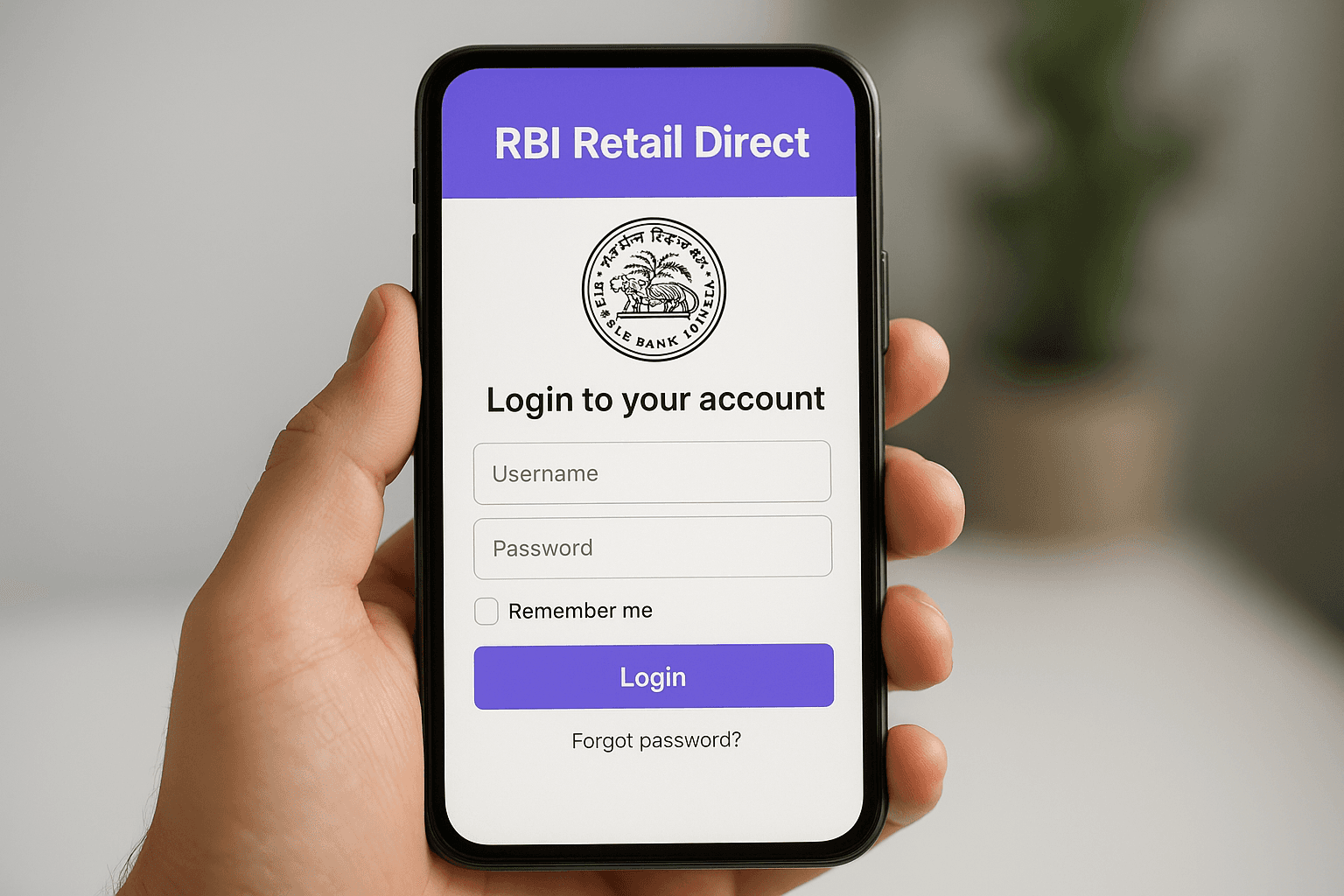
The platform runs on secure infrastructure maintained by the Reserve Bank of India, ensuring your transactions and personal data remain protected throughout the investment process.
Bookmark the official site to avoid phishing attempts. The RBI also provides a mobile app for Android and iOS devices, which you can download from official app stores. The app mirrors the website's functionality, letting you monitor your investments and participate in auctions directly from your phone.
Who can use the platform
You need to be a resident Indian individual to open an RDG account. The platform accepts applications from single account holders only, meaning you cannot open joint accounts or accounts in the name of organizations. Minors cannot register directly, but guardians can open accounts on their behalf. You must have a PAN card, a valid bank account, and an active mobile number linked to your bank account to complete the registration process. Non-resident Indians (NRIs), Hindu Undivided Families (HUFs), and corporate entities cannot use this platform.
What you can invest in through the portal
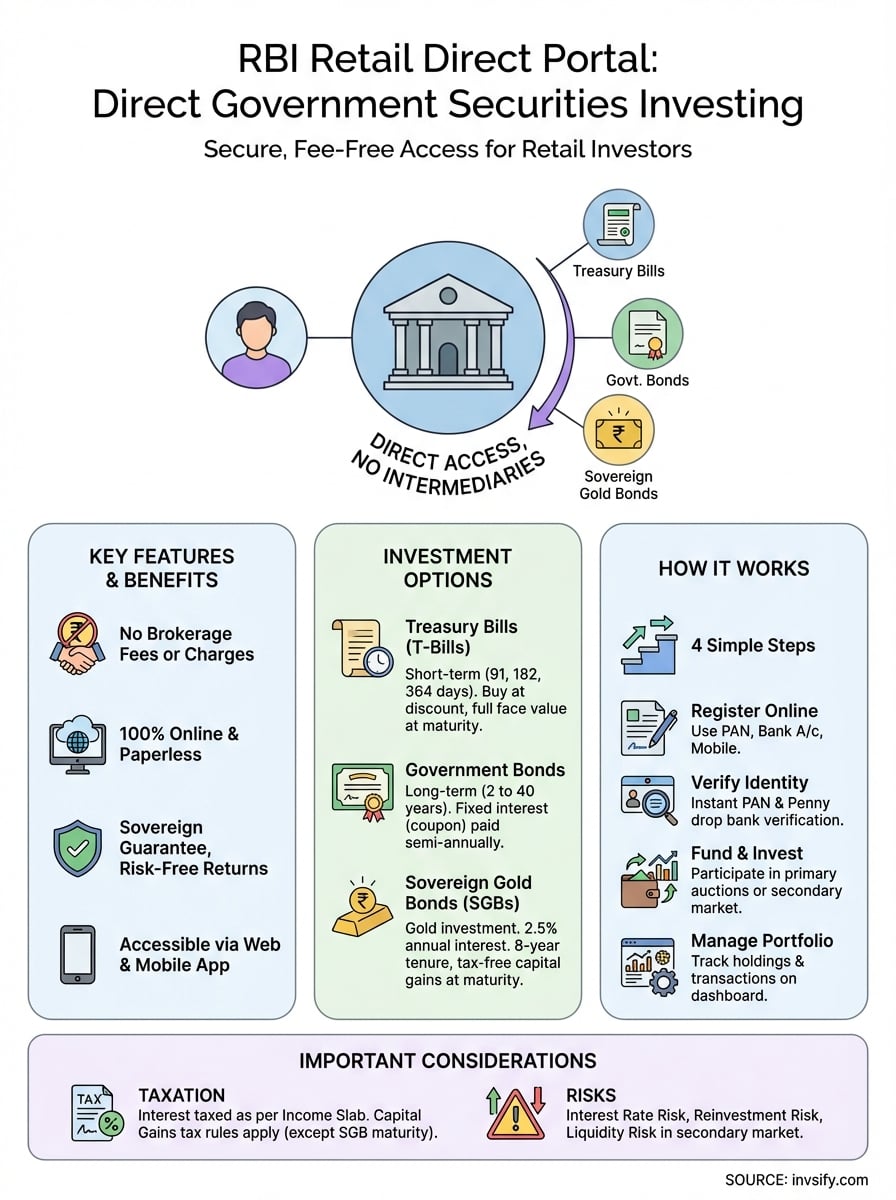
The RBI Retail Direct portal gives you access to three main types of government securities, each serving different investment goals and time horizons. You can participate in primary market auctions where the government issues fresh securities, or buy them in the secondary market where existing securities trade among investors. Both markets operate through the same platform, making it easy to build a diversified portfolio of risk-free instruments.
Treasury Bills
Treasury Bills (T-Bills) function as short-term debt instruments issued by the government for periods of 91 days, 182 days, or 364 days. You buy these securities at a discount to their face value and receive the full amount at maturity. For example, you might pay ₹98,500 for a T-Bill with a face value of ₹1,00,000, and the difference represents your interest earnings. These work well when you need to park funds for a few months while earning better returns than savings accounts.
Government Bonds
Government bonds are long-term securities with maturities ranging from 2 years to 40 years. The government pays you fixed interest (coupon) every six months until maturity, when you receive your principal back. These bonds suit investors who want regular income or plan to hold investments for extended periods. You can also sell these bonds in the secondary market before maturity if you need liquidity.
Government bonds offer predictable income streams backed by sovereign guarantee, making them ideal for conservative portfolios or retirement planning.
Sovereign Gold Bonds
Sovereign Gold Bonds (SGBs) let you invest in gold without physical possession. The government issues these bonds in grams of gold, pays you 2.5% annual interest on the initial investment value, and redeems them at the prevailing gold price after 8 years. You can exit earlier after the fifth year on designated dates. SGBs combine the appreciation potential of gold with regular interest income, offering better returns than buying physical gold or gold ETFs.
How to open an RDG account and log in
Opening a Retail Direct Gilt account takes less than 30 minutes if you have your documents ready. The Reserve Bank of India designed the registration process to be completely paperless and digital, eliminating the need for physical forms or branch visits. You complete everything online through the RBI Retail Direct portal, and your account becomes operational within one business day after successful verification.
The account opening process
Visit rbiretaildirect.org.in and click the registration button on the homepage. You'll need your PAN card details, bank account information, and a mobile number registered with your bank to proceed. The system verifies your PAN instantly through the Income Tax database, so ensure the details you enter match exactly with your PAN card.

The platform then prompts you to verify your bank account through a penny drop test, where it credits ₹1 to your account and asks you to confirm the transaction reference number. This step links your bank account to your RDG account for seamless fund transfers. You set a user ID and password during registration, which you'll use for all future logins. The system also captures your nominee details and communication preferences before finalizing your account.
After submission, the RBI processes your application and sends account credentials to your registered email within 24 hours, allowing you to start investing immediately.
Logging in and accessing your account
Head to the official login page at rbiretaildirect.org.in and enter your user ID and password. The system uses two-factor authentication through an OTP sent to your registered mobile number for added security. Once logged in, you access your dashboard showing available auctions, your current holdings, and transaction history. The platform remembers your device after the first successful login, streamlining future access while maintaining security protocols.
How investing works on Retail Direct
The RBI Retail Direct portal lets you invest through two distinct channels, each with its own bidding mechanisms and settlement processes. You can participate in primary market auctions where the government issues new securities, or purchase existing securities in the secondary market at prevailing prices. Both methods require sufficient funds in your linked bank account before placing orders, and the system debits your account only after successful allocation.
Placing bids in primary auctions
Primary auctions happen on scheduled dates announced by the RBI, typically multiple times each week for different securities. You log into your RDG account, navigate to the primary market section, and select the auction you want to participate in. The platform shows you the minimum investment amount (usually ₹10,000 for bonds and T-Bills) and the face value denomination. You submit either a competitive bid where you specify the yield/price you're willing to accept, or a non-competitive bid where you agree to accept whatever yield the auction determines.
Non-competitive bids guarantee allocation up to ₹2 crore per auction, making them the simpler choice for most retail investors who prioritize certainty over optimal pricing.
The auction closes at the specified time, and the RBI allocates securities based on bid prices. You receive an email notification about your allotment status within a few hours, and the securities appear in your RDG account within one business day.
Buying in the secondary market
Secondary market purchases work like buying stocks through a broker, except you're trading government securities with other investors. The platform displays real-time prices and available quantities for all listed securities. You place a buy order at your desired price, and the system matches it with existing sell orders. Settlement happens on a T+1 basis, meaning securities reach your account one business day after the trade date.
Fees, taxes, and risks to know upfront
The RBI Retail Direct portal operates with minimal costs, but you still face taxation on your earnings and certain risks inherent to fixed-income investments. Understanding these aspects before you commit funds helps you set realistic return expectations and avoid surprises at settlement or during tax filing. The government securities themselves carry virtually zero default risk, but other factors can affect your actual returns and liquidity needs.
Transaction costs and platform charges
The rbi retail direct portal charges absolutely nothing for opening or maintaining your RDG account. You pay no subscription fees, annual maintenance charges, or brokerage commissions when buying government securities through primary auctions or the secondary market. The only cost you encounter is the Goods and Services Tax (GST) on interest earned from State Development Loans (SDLs), which gets deducted automatically before crediting interest to your account. Central government securities remain exempt from this GST. Your bank might charge standard fund transfer fees when moving money to your RDG account, but these costs remain negligible compared to traditional broker charges.
Tax implications on your returns
Interest income from government bonds and treasury bills gets added to your total income and taxed at your applicable income tax slab rate. You receive no tax deduction at source, so you must declare this income while filing returns. Capital gains from selling securities before maturity face different treatment based on holding period. If you sell within three years, gains count as short-term capital gains taxed at your slab rate. Holdings beyond three years qualify as long-term capital gains, taxed at 10% without indexation benefits. Sovereign Gold Bonds follow separate rules, with capital gains exempt from tax if you hold until maturity after eight years.
Tax treatment varies across security types, so maintaining detailed records of your purchase dates and transaction values simplifies compliance during tax season.
Understanding the risks
Interest rate fluctuations create the primary risk you face with government securities. When rates rise, existing bond prices fall in the secondary market, potentially leading to losses if you sell before maturity. Treasury bills carry reinvestment risk, meaning you might struggle to find similar returns when they mature in a low-interest environment. Liquidity in the secondary market remains limited for certain securities, making it difficult to exit positions quickly without accepting unfavorable prices.
Key takeaways
The rbi retail direct portal removes the barriers that once separated individual investors from government securities. You get direct access to treasury bills, government bonds, and sovereign gold bonds without paying brokerage fees or dealing with intermediaries. Opening an RDG account takes under 30 minutes, and you can start investing in primary auctions or the secondary market immediately after approval. The platform charges zero account maintenance fees, making it one of the most cost-effective ways to add risk-free instruments to your portfolio.
Government securities deserve a place in every diversified investment strategy, offering stability and predictable returns backed by sovereign guarantee. At Invsify, we help investors build balanced portfolios that combine the safety of government securities with growth-oriented assets. Our AI-powered platform provides personalized recommendations across asset classes, ensuring you optimize returns while managing risk effectively. Create your free Invsify account to get started with smart, conflict-free financial advice that puts your wealth goals first.