What Are Market Insights? Definition, Examples, and Uses
Shlok Sobti

What Are Market Insights? Definition, Examples, and Uses
Market insights are discoveries about your market that you can actually use. They reveal why customers make certain choices, what drives their behavior, and where real opportunities hide in plain sight. Unlike raw data or surface-level observations, genuine market insights connect different pieces of information to show you patterns that matter for your business decisions.
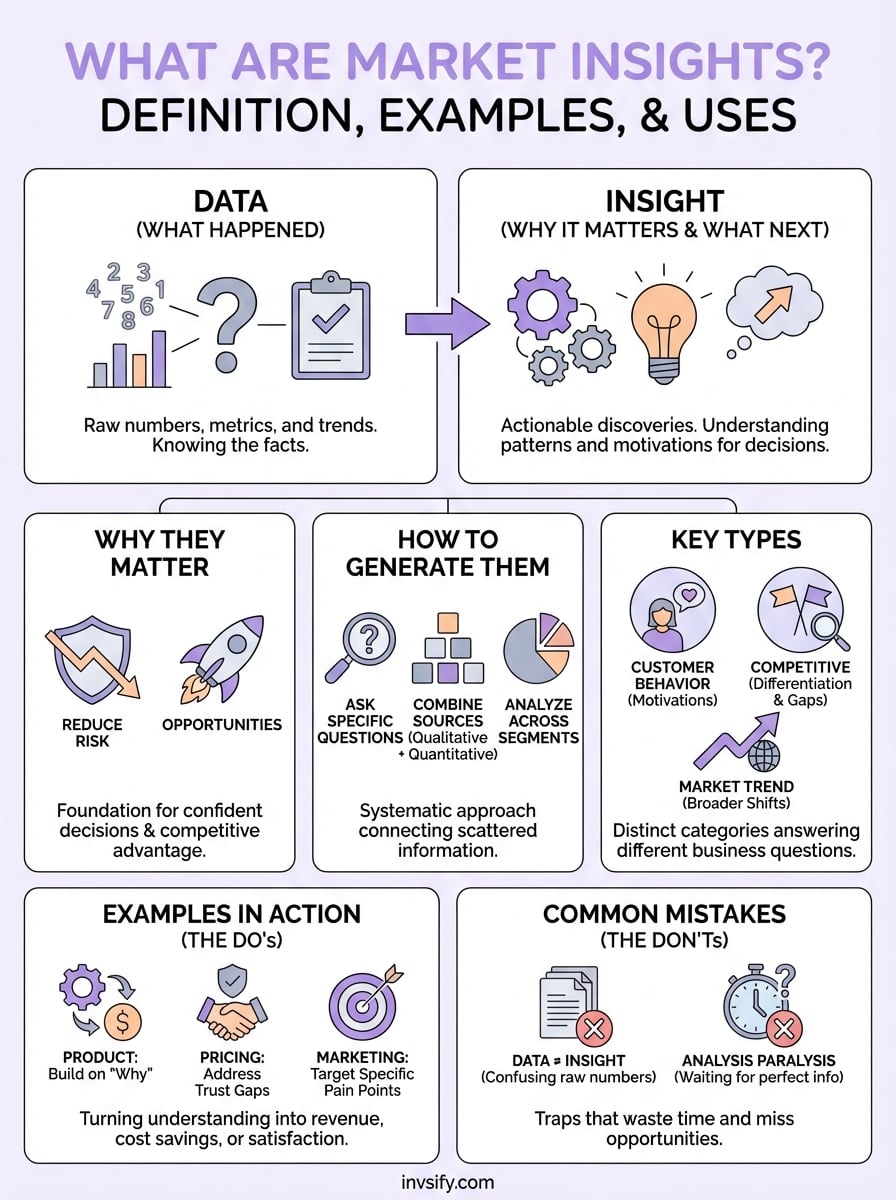
But here's the problem: most companies confuse data with insights. They collect numbers, track metrics, and analyze trends, yet struggle to turn all that information into actions that move their business forward. The difference between data and insight is the difference between knowing what happened and understanding why it matters for what comes next.
This guide explains what market insights really are, how they differ from standard market research, and how to generate and use them effectively. You'll see practical examples of insights in action, learn proven methods to uncover them, and discover common mistakes that prevent good data from becoming useful intelligence.
Why market insights matter
You make dozens of business decisions every week, and each one affects your bottom line. Market insights give you the foundation to make those decisions with confidence instead of guesswork. When you understand what drives customer behavior and spot market patterns early, you reduce risk and identify opportunities before your competitors do. The difference between companies that thrive and those that struggle often comes down to how well they extract and apply these insights.
The cost of poor decisions
Companies that ignore market insights pay a steep price. You might launch products nobody wants, invest in marketing channels that don't convert, or miss obvious shifts in customer preferences until it's too late. Financial services firms that skip proper market analysis often build products based on assumptions rather than actual customer needs. Poor decisions compound over time, draining resources and leaving you further behind competitors who use insights to guide their strategy. Think about what are market insights in terms of insurance: they protect your business investments by ensuring you spend money where it matters.

Without genuine market insights, you're essentially gambling with your business resources.
The competitive advantage
Market insights give you an unfair advantage in crowded markets. You spot gaps in customer needs that others miss, adjust your strategy before market conditions change, and allocate resources to initiatives that actually deliver results. Investment platforms that leverage market insights understand exactly when customers feel frustrated with hidden fees or need multilingual support, then build features that address those specific pain points. This intelligence separates companies that react to change from those that anticipate it.
How to generate market insights
Generating market insights requires a systematic approach that transforms scattered data into actionable intelligence. You need to ask the right questions, gather relevant information from multiple sources, and then analyze patterns that reveal deeper truths about your market. The process isn't about collecting more data, it's about connecting existing information in ways that expose opportunities and risks others miss. Most businesses already have access to valuable data but fail to extract insights because they skip critical steps in the analysis process.
Start with specific questions
You can't find useful insights without defining what problems you're trying to solve. Generic questions produce generic answers, while targeted questions lead to discoveries that actually change decisions. Instead of asking "what do customers want," ask "why do customers abandon our platform after viewing fees" or "what triggers customers to switch from traditional advisors to digital solutions." Your questions should connect directly to business decisions you need to make, whether that's product development, pricing strategy, or market positioning. Write down three specific decisions you face this month, then frame questions that would help you make those choices with confidence.
Combine multiple data sources
Single data sources give you incomplete pictures of reality. You need to layer quantitative metrics with qualitative feedback, combine internal analytics with external market research, and cross-reference customer behavior patterns with industry trends. Financial platforms that understand what are market insights know to look at transaction data alongside customer support conversations and competitive analysis. When you spot the same pattern across different data types, you've likely found something significant. Create a simple matrix listing your available data sources in one column and key questions in another, then identify which sources help answer which questions.

Real insights emerge where different data sources tell the same story from different angles.
Look for patterns across segments
Surface-level analysis treats all customers the same, but powerful insights come from comparing how different segments behave. You might discover that younger investors prioritize mobile features while older ones value human support, or that certain regions respond differently to fee transparency messaging. Break your market into meaningful segments based on behavior, needs, or demographics, then analyze each group separately before comparing results. The differences between segments often reveal opportunities for targeted strategies that generic approaches miss completely.
Key types of market insights
Market insights fall into distinct categories that each serve different strategic purposes. You need to recognize these types because they answer different questions about your business environment. Understanding which type you need determines where you look for data and how you analyze it. When someone asks what are market insights, they're often surprised to learn that insights about customer behavior require completely different approaches than insights about competitor strategy or market trends.

Customer behavior insights
These insights reveal why customers make specific decisions and what motivates their actions. You discover the emotional and rational factors behind purchase choices, the friction points that cause abandonment, and the triggers that convert browsers into buyers. Financial platforms learn through customer behavior insights that fee transparency matters more than interest rates for certain segments, or that users check their portfolios most frequently during specific market events. Track patterns in how customers interact with your product, when they contact support, and what questions they ask before committing to decisions.
Competitive insights
Competitive intelligence shows you where rivals succeed, where they fail, and where gaps exist in the market. You identify which features competitors prioritize, how they position their offerings, and what complaints their customers share publicly. These insights help you differentiate your strategy rather than simply copying what others do. Investment advisory platforms that analyze competitor weaknesses might discover opportunities in multilingual support or transparent fee structures that established players overlook.
Competitive insights are most valuable when they reveal what customers need but aren't getting from current solutions.
Market trend insights
Broader market patterns show you where your industry moves and what forces shape customer expectations over time. You spot regulatory changes before they impact operations, identify shifting preferences across demographics, and anticipate technology adoption curves. Financial services firms need trend insights to prepare for regulatory shifts, changing investor attitudes toward digital platforms, or emerging expectations around AI-powered advice that reshape the entire advisory landscape.
Examples of market insights in action
Real examples show you the practical difference between having data and using insights. These cases demonstrate how businesses transform information into decisions that generate revenue, reduce costs, or improve customer satisfaction. When you see what are market insights applied to actual business scenarios, you understand exactly what to look for in your own data and how to act on what you discover.
Product development decisions
A financial advisory platform noticed high signup rates but poor conversion to paid plans. Surface analysis showed numbers, but deeper insights revealed that customers abandoned the process when they saw traditional commission structures. The insight wasn't just the abandonment rate, it was understanding that users specifically wanted transparency about fees before committing. This discovery led to building a hidden fee calculator that demonstrated savings compared to traditional advisors, directly addressing the underlying concern that caused hesitation.

Effective product decisions stem from understanding the "why" behind customer behavior, not just the "what."
Pricing strategy adjustments
Investment platforms analyzing customer feedback discovered an unexpected pattern across support conversations and surveys. Customers repeatedly mentioned feeling uncertain about costs, even when pricing was clearly listed on the website. The insight revealed a trust gap rather than a pricing problem. The company responded by restructuring how they communicated value, emphasizing their SEBI registration and conflict-free advice model. Revenue increased because the insight identified perception issues that price changes alone couldn't fix.
Marketing channel optimization
A wealth management service tracked campaign performance across channels and found their highest conversion rates came from organic search traffic seeking alternatives to traditional advisors. Customer interviews revealed these users had specific pain points with hidden fees and lack of transparency. This insight shifted their content strategy to focus on fee comparison and regulatory credibility, targeting users actively searching for trustworthy alternatives rather than casting a wide net across all digital channels.
Common mistakes about market insights
You probably make several mistakes when working with market insights, and these errors prevent you from extracting real value from your data. Most businesses fall into predictable traps that waste time, money, and opportunities. Recognizing these mistakes helps you avoid them and focus your efforts on activities that actually generate useful intelligence. The gap between knowing what are market insights and successfully using them often comes down to avoiding these common pitfalls.
Confusing data with insights
Raw numbers aren't insights, they're just starting points. You collect website traffic metrics, transaction volumes, and customer demographics, then mistake this information for actionable intelligence. True insights explain why patterns exist and what they mean for decisions you need to make. Platform analytics might show that 60% of users abandon signup forms, but the insight is understanding that fee uncertainty drives abandonment. Stop labeling every report as an insight when it's simply organized data waiting for interpretation.
Waiting for perfect information
Analysis paralysis kills momentum when you delay decisions until you have complete data. You'll never have perfect information about your market, and waiting too long means competitors act while you research. Financial platforms that postpone launching features until every customer segment is analyzed miss opportunities that early movers capture. Gather enough information to reduce major risks, then test and adjust based on results. Your first attempt won't be perfect, but speed combined with decent insights beats perfect analysis that arrives too late.
Next steps with market insights
You now understand what are market insights and how they differ from simple data collection. The real challenge starts when you apply this knowledge to your own business decisions. Start by identifying three specific questions you need answered this month, then gather data from multiple sources that address those questions. Look for patterns that explain customer behavior rather than just describing it, and test your insights through small experiments before committing major resources.
Financial decisions require particularly strong insights because mistakes directly impact wealth and security. Investment platforms that succeed combine market intelligence with transparent communication, helping customers make informed choices based on real understanding rather than confusion or fear. Explore how Invsify uses market insights to deliver conflict-free financial advice through AI-powered analysis and transparent fee structures. Your next investment decision deserves the clarity that genuine market insights provide, not guesswork disguised as expertise.